My name is Patrik Janovjak and I'm delighted to have the opportunity in this edition to introduce myself to you as the new CIO of CIC (Switzerland). I’ve been following financial markets, risks, return opportunities and investor psychology in my professional life for many years. I discovered my love of cars back when I was a young financial analyst covering the automotive sector. Even today, I still get excited about anything that moves. It doesn't matter whether it's a V8, an EV or anything in between as long as it performs! But my fascination with cars and engines isn't just because they are powerful. It’s because of how everything interacts. You need the right amount of power, the technology has to be reliable, and even the best engine needs a good chassis.
For me, that’s a remarkably accurate description of our work as asset managers. There’s never any shortage of excitement on the financial markets. Liquidity, new technologies, political manifestos, euphoria surrounding particular sectors or the prospect of rapid gains can send prices skyrocketing. But as with a sports car, how fast it goes from 0-60mph is not the only issue. You also need to think about whether the brakes are working, the tyres have enough pressure and the driver can keep a cool head at 120mph.
In our job, it’s not the people who roar away the loudest who win the prizes. It’s the ones who understand risks, construct balanced portfolios and hold on to the wheel when they hit a bumpy patch. Investing is the art of being smart and disciplined in how you weigh up opportunities and risks. Diversification, i.e. spreading investment risk, is not a boring safety feature – it's the finely tuned chassis of a portfolio. The times you particularly notice its value are when the road suddenly gets worse.
My team and I would like to give you regular insights into what's happening on the financial markets through the CIC Perspectives newsletter. In this issue, we're focusing on central bank monetary policy, the ongoing stability of the economy, rising consumer prices and the outlook for equity markets. Our aim is to give you a clear and easy-to-understand assessment, including a look under the bonnet.
I look forward to our journey together.
Patrik Janovjak
CIO
Economic prospects
The Swiss economy speeded up considerably in the second quarter of 2026. Gross domestic product adjusted for sporting events rose 1.5% quarter on quarter. This was the strongest quarterly growth Switzerland has seen since the end of 2021, mainly driven by the chemical/pharmaceuticals sector. Other industries also reported a better picture. The slight fall in the Swiss franc probably helped. We expect things to return to normal in the second half of the year, as the stimulus provided by the pharmaceutical industry is likely to remain volatile and the increase in exports partly resulted from special effects as well as trade flows that had been pulled forward. The current picture suggests the Swiss economy is starting from a robust position, as highlighted by the recent improvement in indicators. Growth forecasts for the full year now stand at 1.7%. Nevertheless, exports are exposed to an international environment that remains uncertain and the risks to the economy are still high.
Oil prices becoming the stress test for the world economy
The ongoing tensions in the Middle East are increasingly becoming a macroeconomic drag. The oil price is acting as a thermometer for measuring the current level of fever. But what matters is not just the absolute level of prices – it’s also how long they stay high for. The longer energy costs are elevated, the greater the risk of them spilling over to service prices, wages and inflation expectations.
These second-round effects, where higher prices take root more generally, are harder to correct and usually require more time to do so. Where things go from here therefore largely depends on whether energy prices stabilise in the months ahead and geopolitical risks remain under control. If this turns out to be the case, it is likely that the economic impact will mainly be seen in higher volatility and temporary cost pressure. On the other hand, if oil and energy prices stay permanently high or rise further, the situation could turn into a serious stress test for growth, corporate profits and the recent progress in combating inflation. (muc)
Markets
Will there by a year-end rally?
September was a difficult month for the stock market, but at least some of the fog of uncertainty should dissipate in the fourth quarter. Everything depends on how the situation in the Middle East develops and what the impact on the oil price will be. If there is a lasting ceasefire, the oil price will collapse and excessively high inflationary expectations will correct. That could allow central banks to revert to an expansionary monetary policy. This would be a very positive environment for equities, trigger a year-end rally and gift investors new all-time highs. (bae)
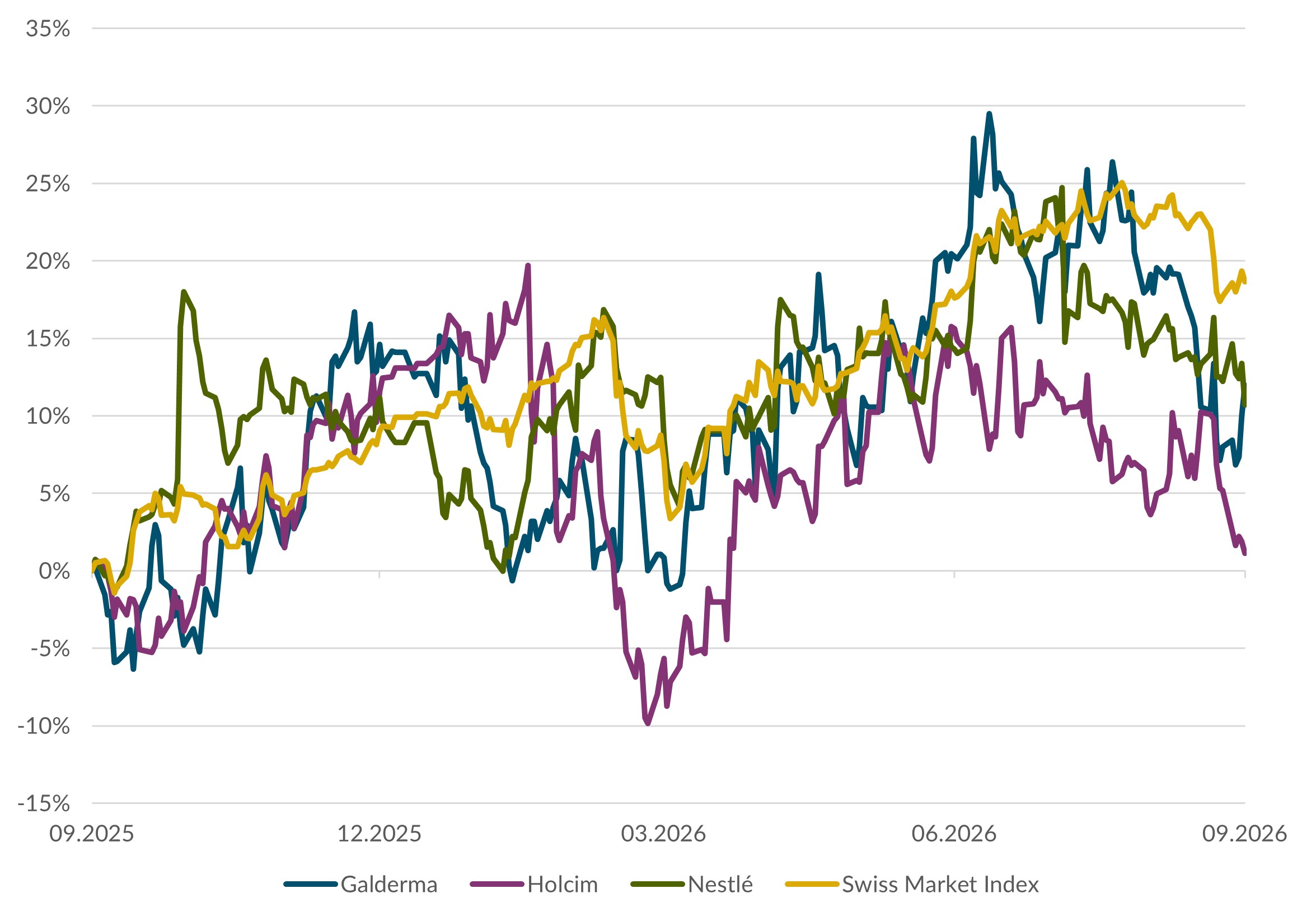
Swiss equities
Inflation in Switzerland remains well below the Swiss National Bank’s target of 2%, so it is sticking to its zero interest rate policy. Because other central banks have hiked their benchmark rates, the yield spread has increased, resulting in a slightly weaker Swiss franc. This will have a positive effect on corporate profits. There is no alternative to equities in Switzerland; the dividend yield is 2.8%, against 0.5% on a 10-year government bond. (bae)
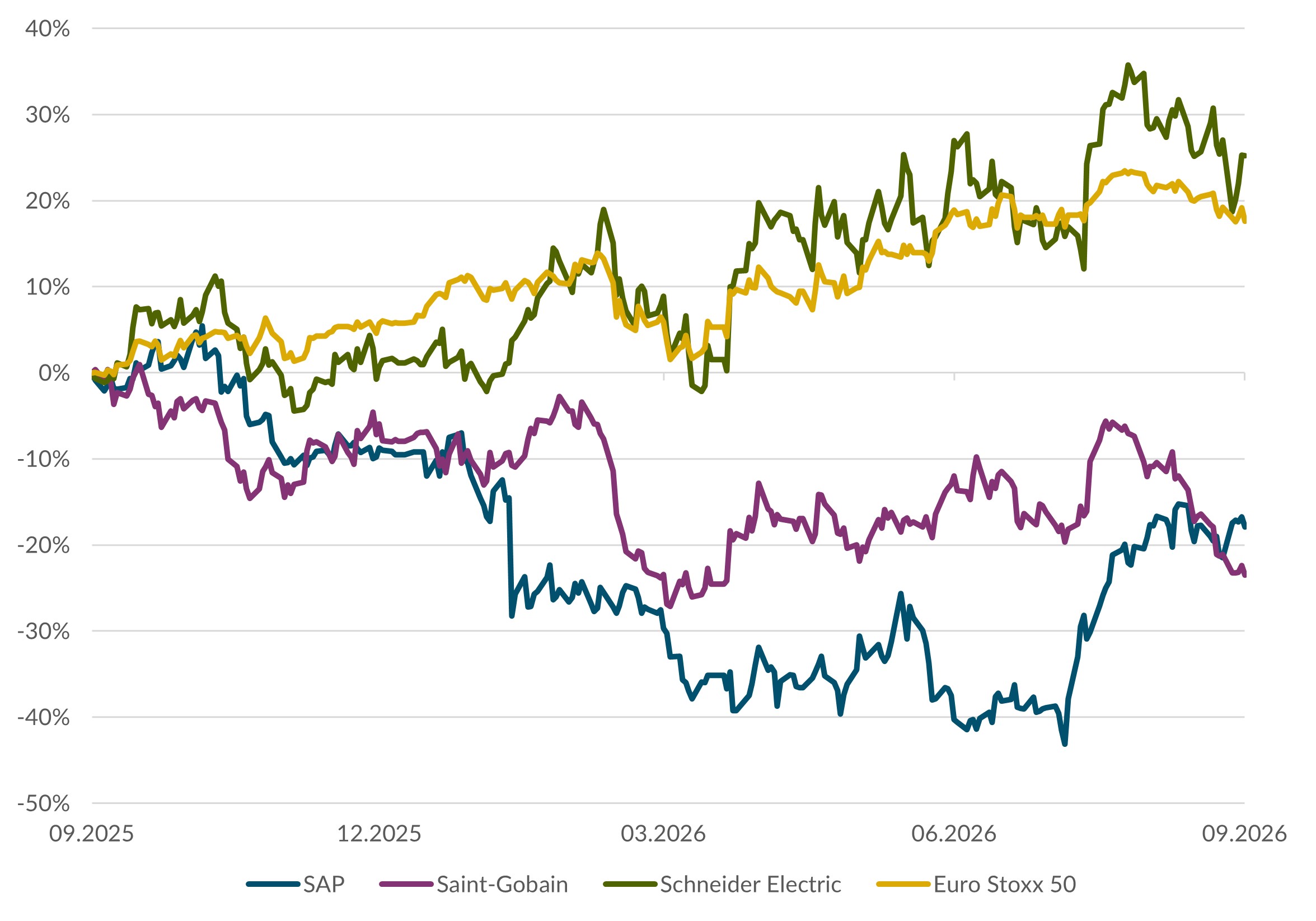
European equities
So far this year the European Central Bank has already raised its benchmark rate twice to 2.5% and announced it will go further, as inflation is still stubbornly high. On the other hand, the European economy seems to be finally getting back to moderate growth after years of stagnation. The geopolitical environment has changed; Europe has to re-orient itself and implement long-overdue reforms as a matter of priority. Things can pretty much only get better, so we are still positive on European equities. (wan)
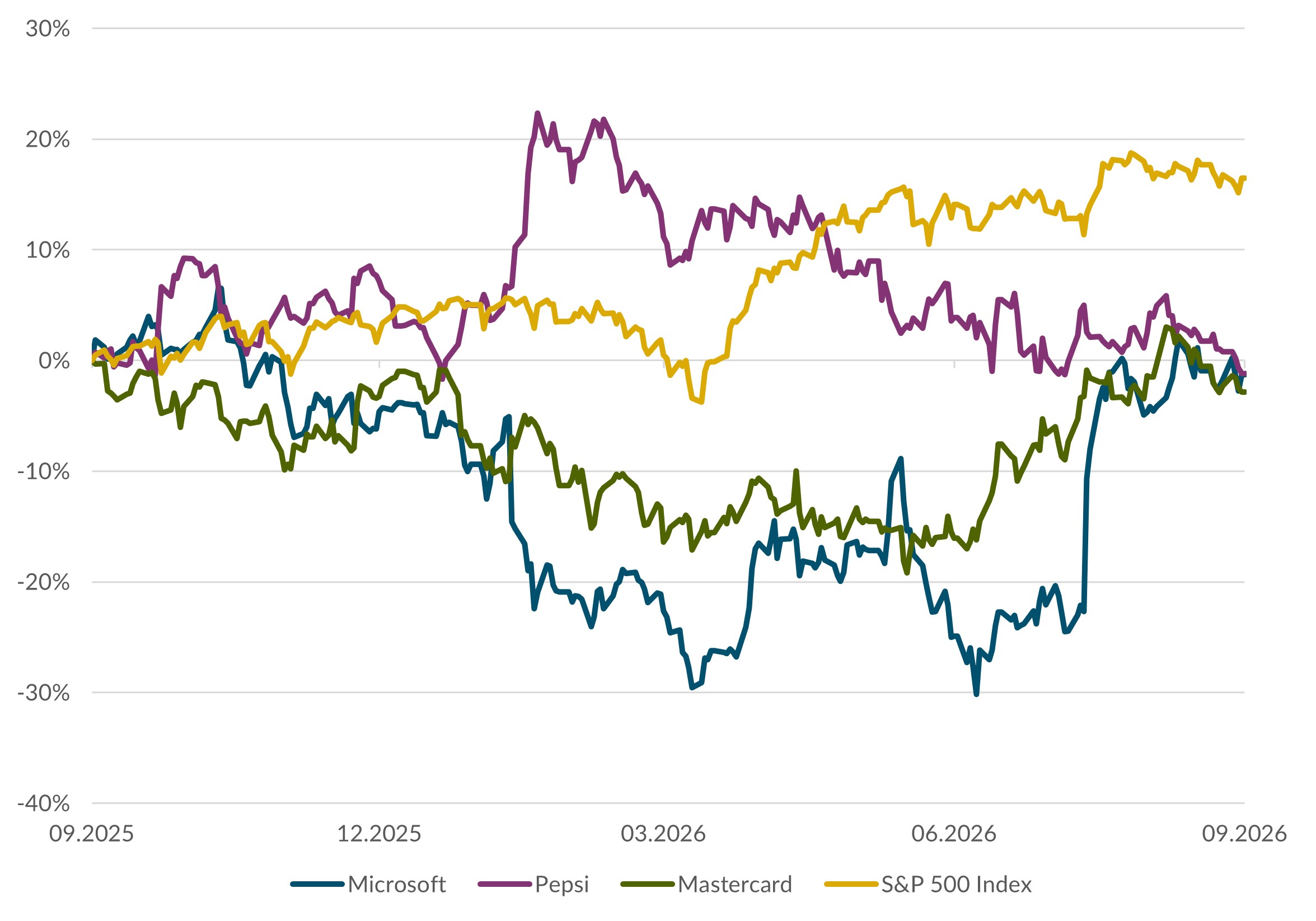
US equities
Nine months in, Wall Street stands significantly higher than it did at the start of the year in spite of geopolitical tensions, high oil prices and rate hikes all over the world. The market is being supported by the progress made in AI and strong demand for it, combined with robust company results at the half-year stage. We expect volatility to remain high in the fourth quarter. The mid-term elections in the United States have often been a positive driver for equity markets in the past, but it will be important to keep a close eye on the situation in the Middle East. (amm)
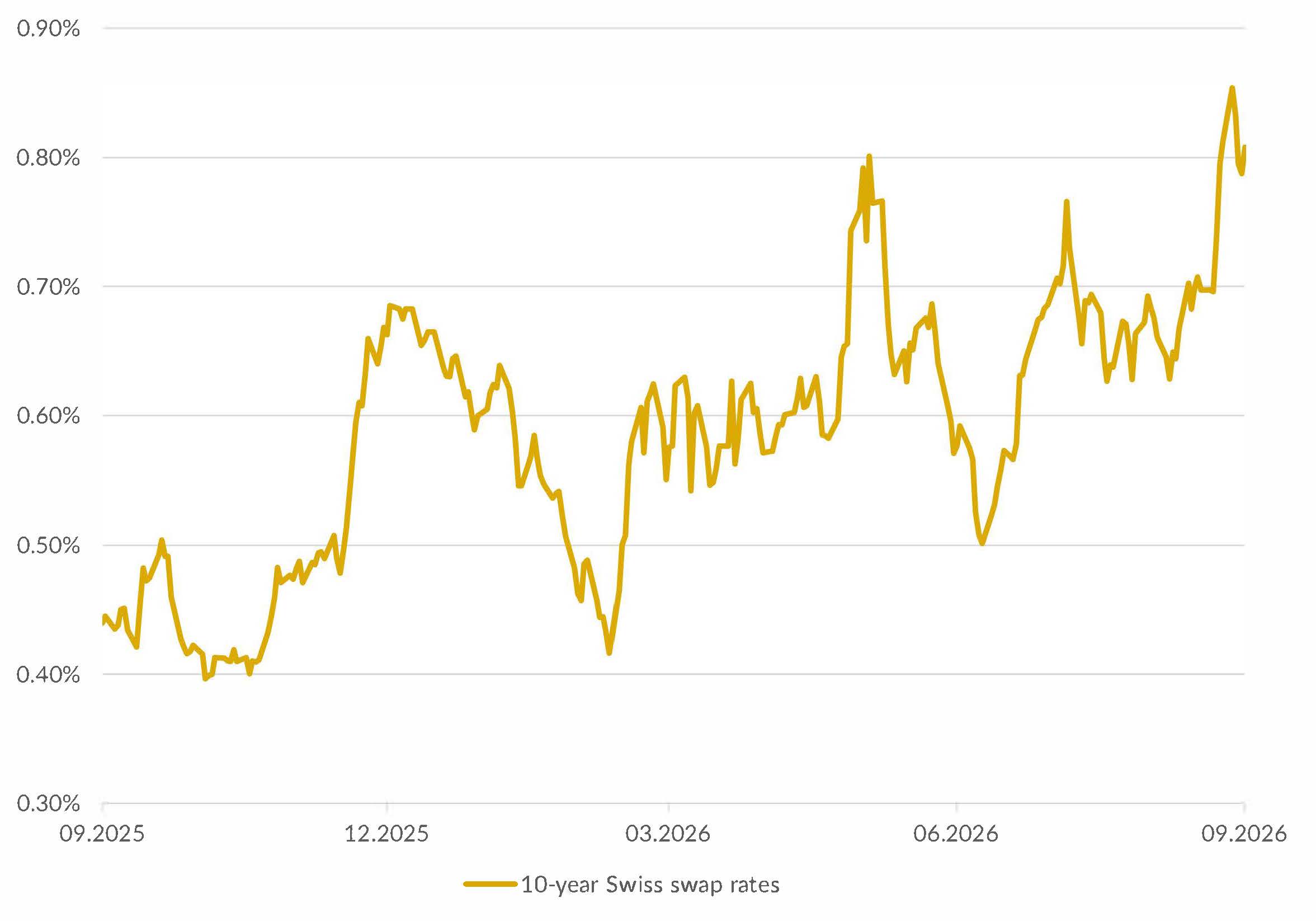
Bonds
Yields on global bond markets went up last quarter, especially in medium and long maturities. This was driven by the inflationary risks from rising energy prices, which boosted expectations that monetary policy will turn more restrictive in future. Adding to the upward pressure on yields were higher risk and maturity premiums caused by rising government deficits. Large volumes of issuance from sovereign borrowers and tech companies looking to finance AI infrastructure accentuated the trend.
No broad-based deterioration in corporate credit ratings can be discerned at present. The market is mainly being affected by interest rate and supply risks. The current environment is likely to keep bond markets highly volatile, which suggests portfolios should hold positions in short maturities with a high credit rating. (muc)
Authors:
Marc Ammann (amm), Roger Baumann (bae), Carl Münzer (muc), Andreas Weiss (wan)
Important information
This document constitutes advertising according to the Swiss Financial Services Act (FinSA). It is intended for information and marketing purposes only. The information it contains does not constitute an individual recommendation, an offer, a solicitation to issue an order to purchase or sell securities or other investments, or legal, tax or any other form of advice. Any statements and forecasts included in this document are for information purposes only and are subject to change at any time without prior notice. Bank CIC (Switzerland) Ltd. makes no warranty as to the completeness, reliability, accuracy and timeliness of the information contained in this document. Forward-looking statements and forecasts are based on current assumptions and assessments and therefore do not constitute reliable indicators of future events. The bank accepts no liability for any damage arising from the use of the information and statements provided in this document. This document is not the result of financial analysis and is consequently not required to comply with the statutory regulations concerning the independence of financial analyses. The sending, import or distribution of this document and copies thereof to the United States or to US citizens (within the meaning of Regulation S of the US Securities Act of 1933) is prohibited. This also applies to other jurisdictions that consider such actions to be in breach of their applicable laws.